Hadrian’s Villa Mosaic Table
- This is the only Hadrian’s Villa mosaic table from Cardinal Furietti’s collection on the market
- It was excavated from the legendary complex that housed Rome’s greatest artworks
- This mosaic is documented in Cardinal Furietti’s important archaeological publication “De Musivis”
- It represents the ultimate convergence of imperial Roman grandeur and archaeological significance


Hadrian’s Villa Mosaic Table
118-134 CE | Roman
Mosaic tabletop with later gilt wood base
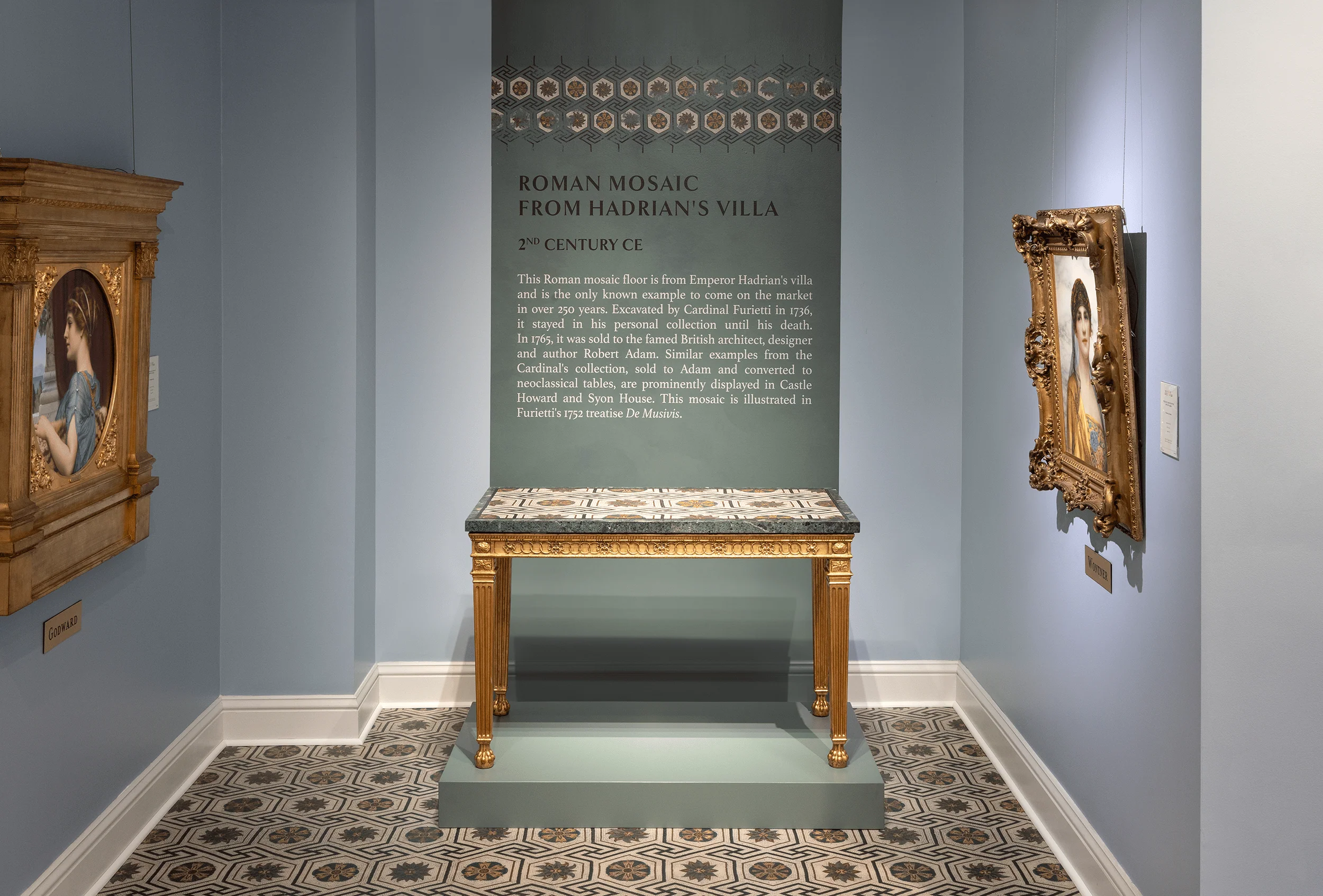
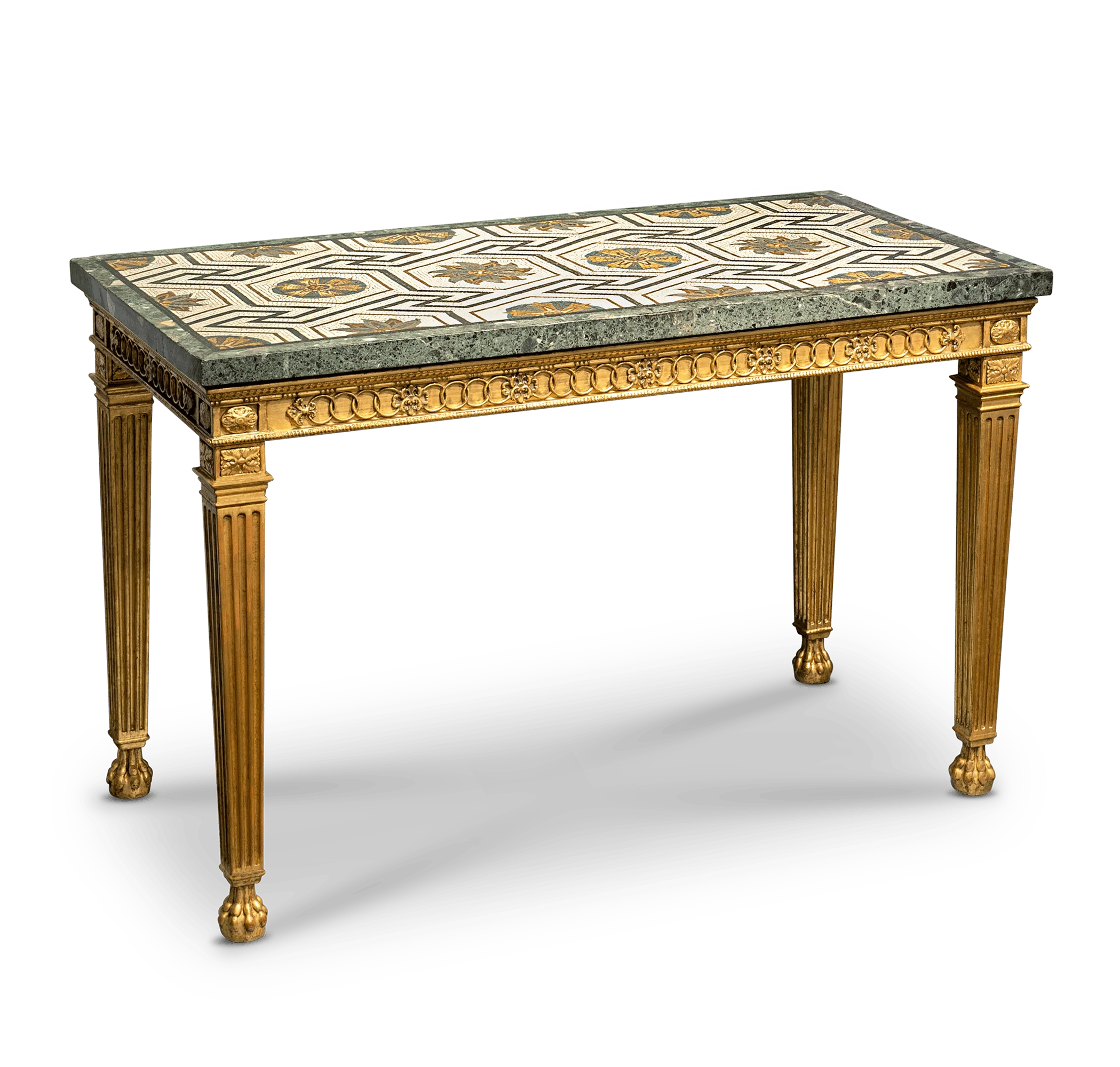
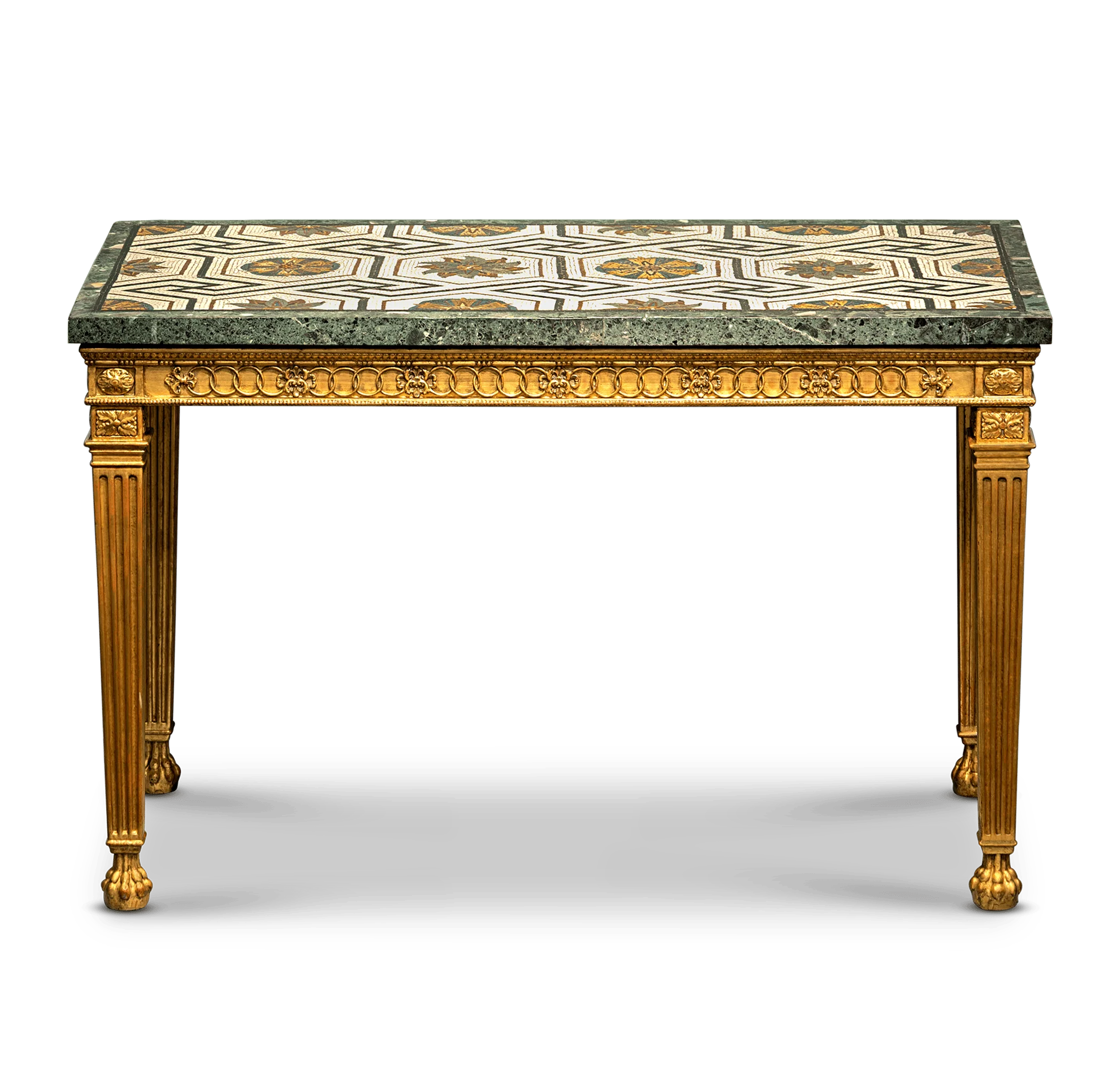
This extraordinary mosaic table from Hadrian’s Villa stands as one of antiquity’s most important surviving treasures, representing the ultimate convergence of imperial Roman grandeur and archaeological significance. Excavated from the legendary complex that housed Rome’s greatest artworks, this magnificent piece bears the distinction of being walked upon by Roman emperors.
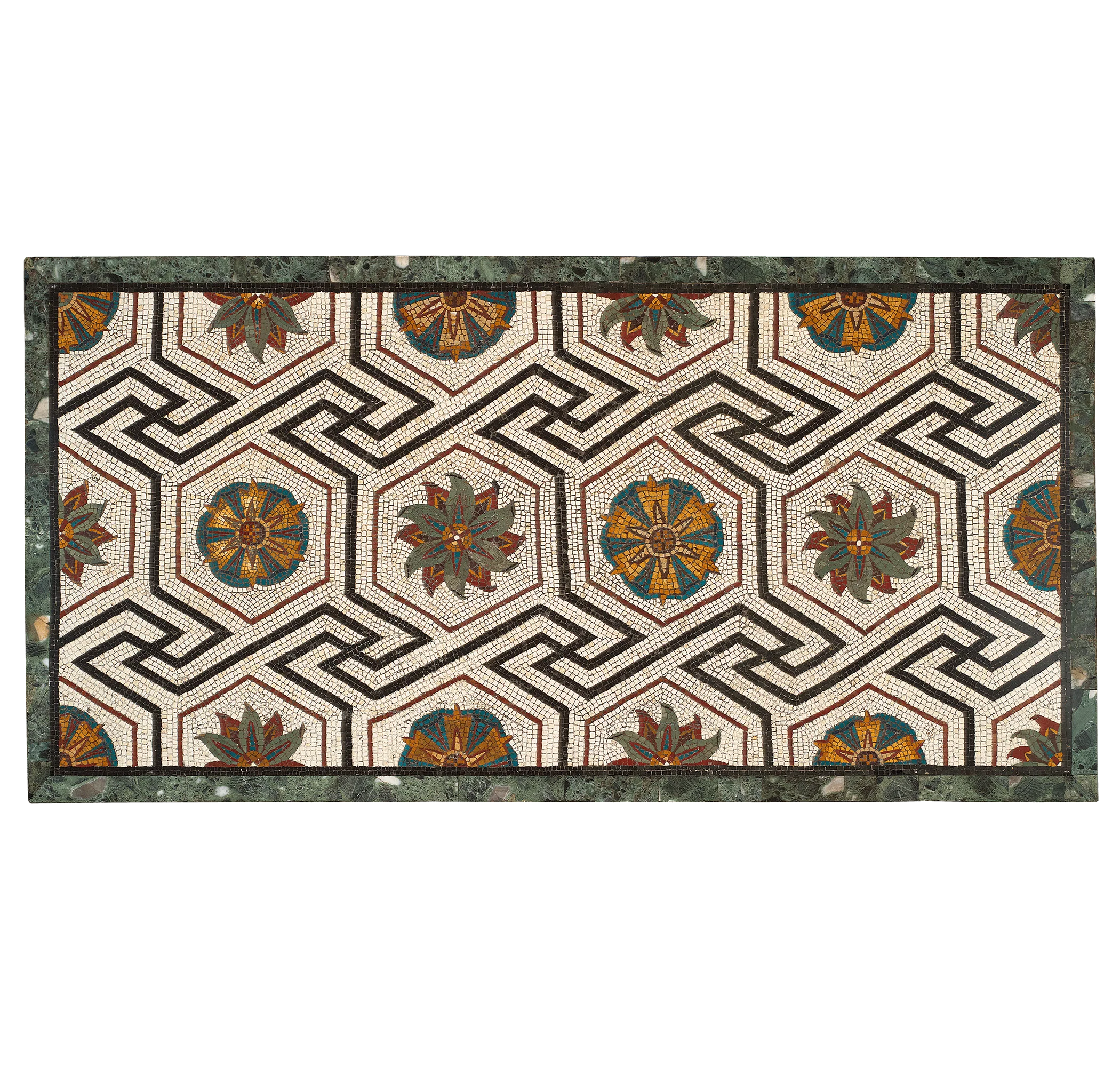
The mosaic’s intricate geometric patterns showcase the supreme artistry of Roman craftsmen, featuring meticulously arranged tesserae that create a mesmerizing interplay of earth tones and geometric precision. Bordered by bands of varied marble, including precious verde antico, the composition displays repeating diamond and square motifs that demonstrate the mathematical sophistication of imperial Roman design. The later addition of its sumptuous gilt wood base elevates the ancient mosaic with neoclassical grandeur, featuring fluted columns, acanthus leaf capitals and elaborate carved moldings that perfectly complement the Roman aesthetic.
Hadrian’s Villa, constructed between 118 and 134 CE, represented the pinnacle of Roman imperial achievement and served as the private retreat of one of history’s most cultured emperors. Emperor Hadrian, who reigned from 117 to 138 CE, was a philosopher, poet, architect and military strategist whose villa covered an area larger than Pompeii and housed antiquity’s most irreplaceable artworks. The villa’s rediscovery in 1461 marked the Renaissance period’s most significant archaeological find, though large-scale excavation didn’t begin until Cardinal Giuseppe Alessandro Furietti’s groundbreaking work in 1736-1738. Cardinal Furietti, both scholar and connoisseur, transformed several of the villa’s most celebrated mosaic floor fragments into tabletops, documenting his designs in his seminal work De Musivis (1752), where this very mosaic appears in Plate IV. Following the Cardinal’s death, his heirs sold tables from his estate, which were acquired in 1765 by the renowned English architect Robert Adam, who added the elaborate gilt bases before placing them in Britain’s most important homes, including Castle Howard, Holkham Hall and Syon House. Today, some examples reside in important museum collections, including the Victoria & Albert Museum.
Circa 118-134 CE with later gilt base
53 1/4″ long x 27″ wide x 34″ high (135.26 x 68.58 x 86.36 cm)
Related products
-
Egyptian Empire Bedroom Suite
-
Silver-Gilt Exhibition Tea Table by Maison Aucoc
-
The Linke Grand Regulator World’s Fair Clock